
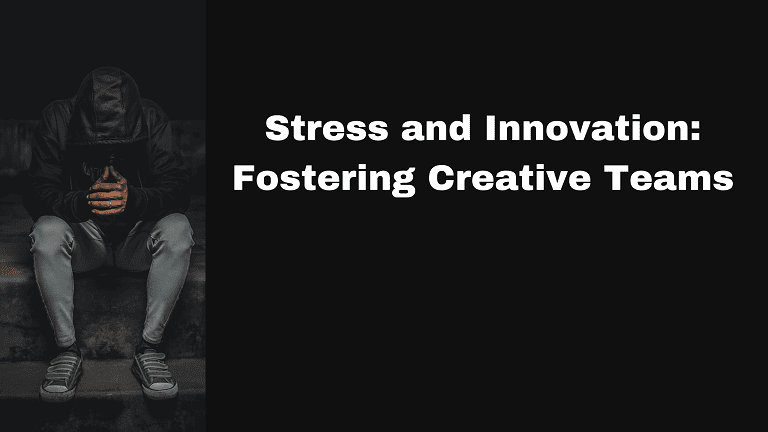
Stress and Innovation: Fostering Creative Teams
In today’s competitive and fast-changing world, innovation is no longer optional—it is essential. Organizations expect teams to think creatively, solve complex problems, and deliver fresh ideas consistently. However, this constant demand for performance often brings one major challenge: stress.
Stress and innovation share a complicated relationship. While a certain level of pressure can spark creativity, excessive stress can shut it down completely. Understanding how to manage stress effectively is key to fostering creative, innovative teams that thrive rather than burn out.
The Relationship Between Stress and Creativity
Stress is the body’s response to pressure or demand. In a work environment, deadlines, targets, competition, and uncertainty all contribute to stress. Interestingly, not all stress is harmful.
Moderate stress can:
Increase focus and motivation
Encourage problem-solving
Push teams to think differently
However, chronic or intense stress has the opposite effect. It reduces cognitive flexibility, increases fear of failure, and limits creative thinking. Innovation suffers when people feel overwhelmed, exhausted, or unsafe.
Why Creativity Needs Psychological Safety
Innovation requires risk-taking. Employees need to feel safe sharing unconventional ideas without fear of criticism or failure. High-stress environments often create the opposite culture—one driven by fear, blame, and perfectionism.
When teams feel psychologically safe:
They experiment more freely
They collaborate openly
They learn from mistakes
They think creatively
Reducing harmful stress helps create this sense of safety, which is essential for innovation.
Stress as a Double-Edged Sword
Stress is not always the enemy of innovation. Short-term challenges, tight deadlines, or ambitious goals can energize teams and push them to perform at their best. The problem arises when stress becomes constant and unmanaged.
Creative teams need challenge, not pressure. Challenges inspire growth; pressure creates fear. Leaders must recognize the difference and design environments that encourage curiosity rather than anxiety.
How Excessive Stress Blocks Innovation
When stress levels remain high for too long, the brain shifts into survival mode. This limits higher-level thinking and creativity. In such conditions:
Teams rely on familiar solutions
Risk-taking decreases
Communication breaks down
Burnout becomes common
Innovation thrives in calm, focused minds—not in constant urgency.
The Role of Leadership in Managing Stress
Leaders play a critical role in shaping how stress affects innovation. A leader’s attitude toward deadlines, mistakes, and communication sets the tone for the entire team.
Supportive leaders:
Encourage open dialogue
Normalize learning from failure
Set realistic expectations
Prioritize well-being alongside results
When leaders model healthy stress management, teams feel empowered to do the same.
Creating a Balanced Work Environment
Fostering innovation requires balance. Teams need structure and goals, but also flexibility and autonomy. Overly rigid systems increase stress and limit creativity.
Ways to create balance include:
Allowing flexible work arrangements
Encouraging breaks and recovery time
Avoiding constant urgency
Providing clarity around priorities
A balanced environment gives creative ideas space to develop.
Collaboration Over Competition
Internal competition can increase stress and discourage collaboration. While healthy competition may boost performance, excessive comparison damages trust and creativity.
Innovative teams thrive on collaboration. Sharing ideas, building on others’ thoughts, and working together reduces individual pressure and improves outcomes. Collective creativity is often stronger than individual brilliance.
Embracing Failure as Part of Innovation
Innovation involves experimentation, and experimentation involves failure. Stress increases when failure is punished or stigmatized.
When teams view failure as feedback rather than defeat:
Stress decreases
Learning accelerates
Creativity expands
A culture that supports learning from mistakes fosters innovation more effectively than one focused solely on success.
Encouraging Creative Recovery
Creativity is not a constant state—it requires mental recovery. Continuous work without rest leads to creative fatigue and stress.
Organizations that value innovation encourage:
Breaks during the workday
Time for reflection
Opportunities for learning and exploration
Recovery is not wasted time; it is an investment in creative performance.
Individual Stress Awareness Within Teams
Every team member experiences stress differently. What motivates one person may overwhelm another. Encouraging self-awareness and open communication helps teams support each other.
Simple practices like regular check-ins, feedback sessions, and mental well-being discussions can prevent stress from silently damaging creativity.
Innovation Thrives Where People Thrive
Innovation is not just about processes or tools—it is about people. Creative teams need energy, curiosity, and emotional well-being to perform at their best.
When organizations treat stress management as part of innovation strategy, they unlock long-term creativity, stronger collaboration, and sustainable success. Reducing harmful stress does not lower performance—it enhances it.
By fostering supportive environments, balanced expectations, and psychological safety, teams can turn pressure into purpose and stress into a catalyst for innovation.
Frequently Asked Questions (FAQs)
- Can stress help innovation?
Yes. Moderate, short-term stress can boost focus and motivation, supporting creativity.
- How does excessive stress affect creative teams?
It reduces risk-taking, limits creative thinking, and increases burnout.
- What is psychological safety in teams?
It is the feeling that one can share ideas and make mistakes without fear of punishment.
- How can leaders reduce stress in creative teams?
By setting realistic goals, encouraging open communication, and supporting work-life balance.
- Does failure harm innovation?
No. When treated as learning, failure strengthens innovation and reduces stress.
- Why is collaboration important for innovation?
Collaboration reduces individual pressure and allows ideas to grow collectively.
- Can workplace culture affect creativity?
Yes. Supportive, balanced cultures encourage innovation more than fear-driven ones.
- How can teams recover creatively from stress?
Through breaks, reflection, learning time, and mental recovery practices.
- Is competition bad for innovation?
Excessive competition increases stress; collaboration is more effective for creativity.
- What is the key to fostering innovative teams?
Balancing challenge with support and managing stress intentionally.
Thanks for visiting – Depression Stress Anxiety